
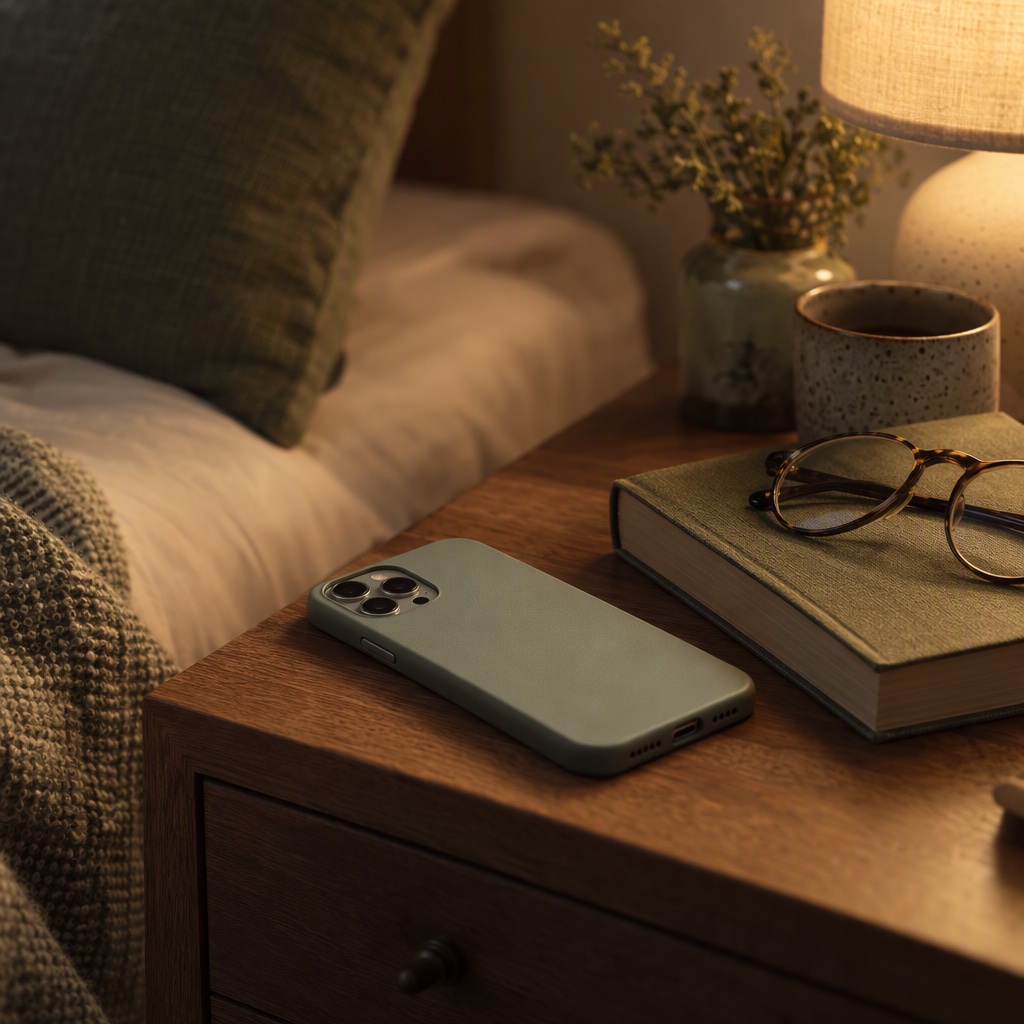
Phones fall off beds for a boring reason: when you are lying down, the mattress edge sits at roughly the same height as your face, and the phone ends up resting on a slope of duvet. The fix is a mix of a better landing spot, a hold that does not fail when you are half asleep, and a habit of putting the phone down before your eyelids do. None of it costs much, and all of it works.
- Put the phone on a firm, flat surface — a nightstand, shelf, or tray — not on the duvet.
- A ring grip or finger holder gives a positive hold so it cannot slide out of a loose grip.
- A strap catches the phone if it does slip off the edge.
- Charge the phone away from the edge so a tugged cable cannot pull it down.
Why does this keep happening?
When you are sitting up, your phone is at desk height and a fall is a short one; lying down, the same phone is at face height with a duvet slope aimed at the floor. Your grip is also at its weakest when you are falling asleep, which is exactly when the phone is still in your hand. Add a slippery case back and a smooth duvet cover, and the slide off the edge is almost a formality. The drop usually happens in the first few minutes after you lie down, or in the dark when you reach for the phone in the morning. Understanding that pattern helps, because it tells you the two moments that need a different habit: lights out and wake up. That pattern is also why two small changes beat one big one.
What habit actually fixes it?
Put the phone down before you lie down, not after. The whole problem is a phone that stays in your hand through the moment your grip relaxes, so the fix is a landing spot you use every night: a nightstand, a wall shelf, or a small tray on the dresser within arm’s reach. If you use the phone as an alarm, consider a simple clock instead, or move the charging spot slightly further from the edge so a sleepy reach becomes a deliberate one. The second habit is the morning one: plug the phone in on the stand before you get into bed, so there is no reason to hold it while you fall asleep at all. Habits beat gadgets here, but the gadgets make the habits easier to keep.
Does the case matter?
It helps, but only at the margins. A case with a raised lip around the screen means a flat fall lands on the rim rather than the glass, which is the difference between a scare and a cracked screen. A matte or textured back grips a duvet slightly better than a glossy one, and it is less likely to slide toward the edge in the first place. What a case cannot do is change the height of the fall or improve your grip at 1 a.m. Our guide to how to choose a phone case that actually protects explains which features earn their bulk if you want the details.
Do grips and straps really help?
They change the failure mode. A ring grip or finger holder gives you a positive hook for one or two fingers, so a relaxing hand still holds the phone — it is hard to fall asleep while your finger is through a ring, because the tug wakes you. A strap attached to a case anchor takes it further: if the phone does leave your hand, it hangs from your wrist or the case instead of hitting the floor. Neither accessory is magic, and a grip stuck to a textured case back is less reliable than one on a smooth shell, but both are cheap ways to buy yourself a second chance. Our take on whether phone grips and pop sockets are worth it covers the trade-offs honestly.

Grips & Ring Holders — holder. Designed for everyday carry and backed by our 30-day happiness guarantee.
How do I stop the cable pulling it off?
The other classic bedroom drop is the cable yank: you knock the charger, the cable tightens, and the phone follows it off the edge. A shorter cable reduces the slack available for this to happen, and routing the cable behind the stand rather than over the top removes most of the risk. If you charge on a nightstand, leave a small loop of cable so the connector takes the tug instead of the phone, and avoid cheap cables with stiff connectors that hold their shape against the phone. Wireless charging removes the cable problem entirely, which is one of its quietest benefits at a bedside. Either way, the goal is the same: nothing should be able to pull the phone toward the edge.
What should I check after a drop?
Work from the outside in. Look at the corners and the case first, because cracked corners often mean the impact was worse than it looks, then check the screen for hairline cracks, especially around the edges and near the speaker grille. Open the camera app and look at the lens for scratches or specks, and take a test photo in good light — a damaged lens shows up as a blurry corner or a smear that will not wipe off. If the phone seems fine, remove the case and check its corners, because a case that took the hit may not protect as well next time. If anything is genuinely broken, get it looked at promptly — a chipped lens or a cracked corner tends to get worse rather than better with time.
Frequently asked questions
- Will a screen protector stop a drop from a bed? It helps with scratches and the occasional small-impact crack, but a fall onto a hard floor can still break the glass underneath. Treat a protector as cheap insurance that raises your odds, not as a guarantee that nothing will happen.
- Is a nightstand the only safe spot? No. A wall shelf, a small tray on a dresser, or a stand on the floor beside the bed all work, as long as the surface is flat, stable, and far enough from the edge that a sleepy reach cannot knock anything off.
- Do bed rails or phone slings help? They can. Anything that creates a physical barrier between the phone and the floor gives you a second chance, and a simple fabric sling beside the pillow keeps the phone from sliding toward the edge in the first place.
- What fall height actually damages a phone? There is no safe height, but a bed is risky because the phone tends to land screen-down at an awkward angle on a hard floor. Corner and edge impacts do more damage than flat drops, whatever the height.
- How do I stop a shared phone alarm waking me overnight? Put the second phone on their side of the bed with the alarm set to vibrate only, or agree on one designated alarm phone. Two phones on one nightstand doubles the chance of a 3 a.m. tug-of-war with the duvet.


