
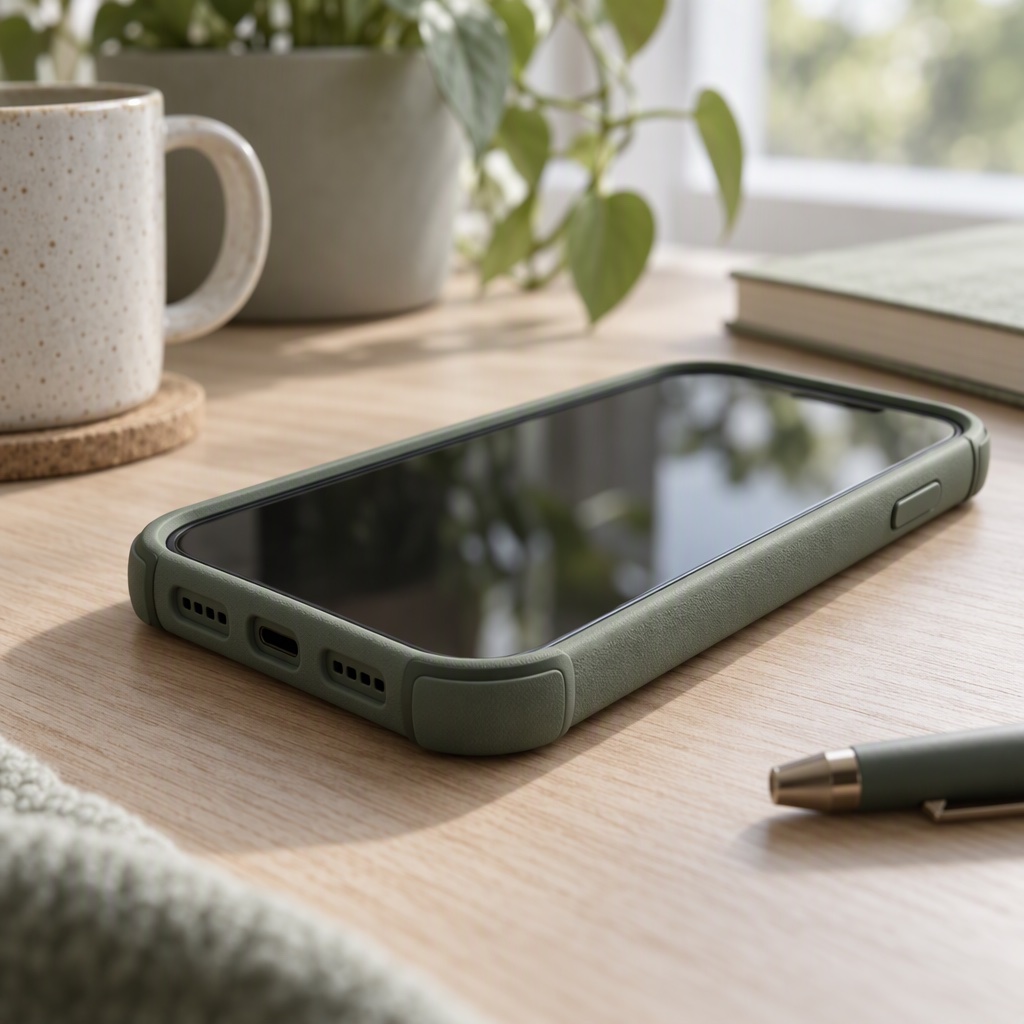
A work phone lives a harder life than a personal one. It goes into bags with tools, gets set down on hard floors, gets handled with gloves or greasy hands, and sometimes stays in a hot vehicle between jobs. The right work case is not the thinnest or the smartest looking — it is the one that survives a drop, wipes clean, and still lets you answer a call with one hand while you are carrying something else.
- Protection at the corners matters more than any advertised drop rating.
- Choose a material you can wipe clean, because work cases get grubby fast.
- Decide early whether you need card storage or a strap for carrying.
- Keep the area around the charging coil clear if you charge wirelessly.
What makes a work phone case different from an everyday one?
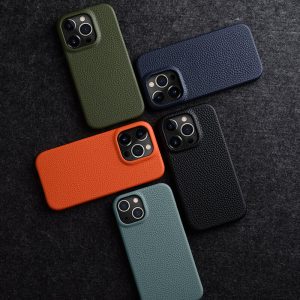
Work cases face a specific pattern of abuse. They get dropped on concrete rather than carpet, squeezed into full bags, and left in hot vehicles between sites. They are also handled far more often, so the seams and button covers need to be tight enough that no grit works its way inside. An everyday case is usually chosen for looks first, but a work case should be chosen for grip and impact protection first. Colour matters in a practical way too: a very dark case shows every scuff and speck of dust, while a mid-tone hides them better. Think about where the phone actually spends its day and choose for that, rather than for the photo on the product page.
iPhone Cases — case. Designed for everyday carry and backed by our 30-day happiness guarantee.
How much drop protection do you really need?
Protection is mostly about the corners and the raised lip around the screen. A case with thickened or air-pocketed corners absorbs the impact that a flat back cannot, which is usually the difference between a scare and a cracked screen. Look for a raised rim around the display so a face-down drop lands on the case rather than the glass. You do not need the bulkiest option to get this, because plenty of slim cases now build corner cushioning in. If the phone spends the whole day in a toolbox or a delivery van, aim for the more protective end of the range. If it mostly rides in a pocket next to a laptop, a midweight case with cushioned corners is usually enough. For a deeper look at how impact protection actually works, our guide to choosing a phone case that actually protects walks through the same ideas in more detail.
Is a slim case enough for a job site?
A slim case handles scratches and small drops, but a job site adds risks that a slim case cannot absorb: falls onto hard concrete, crushing under equipment, and grit working its way into the ports. If the phone is genuinely on site, choose a fuller back with extra material at the corners, and make sure the camera lens sits behind a raised lip, since a scratched lens is expensive to fix. Some full-cover designs add a flip or clamshell front, which protects the screen in a bag but adds bulk for everyday use. A good compromise is a moderately thick case with a grippy back and a raised camera rim — enough protection for a site without needing the heaviest option available.
Should a work phone case have card storage?
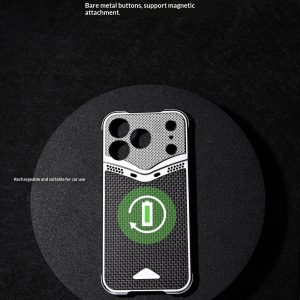
Card storage is convenient and it is also a trade-off. A wallet-style case keeps a badge, transit card, and a spare bill in one place, which helps if you go through doors or turnstiles all day. The downside is that cards add thickness, and some wallet designs make wireless charging awkward or stop badges reading properly. If you carry a badge, check that the card slot does not sit over the charging coil area and that the badge still scans through the case wall. A slimmer alternative is a magnetic card holder case, which keeps the card separate from the charging zone and lets you change cases without losing the card. Decide based on whether you use the card every day or only occasionally.
iPhone Cases — case. Designed for everyday carry and backed by our 30-day happiness guarantee.
How do you carry a work phone when your hands are full?
If your day involves carrying boxes, tools, or paperwork, a pocket is not always available. A lanyard or a crossbody pouch keeps the phone off the ground and within reach, and it frees your hands for the job itself. Look for a strap that attaches around the case rather than relying on a small clip, because clips tend to fail under load. An anti-drop strap case adds a tether you can loop over your wrist while you climb or reach into tight spaces. Whichever you choose, make sure the attachment is secure and the phone sits flat against your body rather than swinging at the end of the strap. If you work near machinery, check that a loose strap is permitted before wearing it into the workspace. If you are unsure whether a strap is right for you at all, read whether phone straps and lanyards are worth it before buying one.
What should you check before buying?
Read the case dimensions and compare them with your phone, because a case built for a near-identical model can cover a button or block a port. Check that the cutouts line up with the charging port, the speaker, and the microphone — a covered microphone hole makes you sound muffled on calls. If you charge wirelessly, confirm the case is thin enough around the coil or that it includes a magnetic ring. Button covers should feel firm but still press without effort. Finally, note the returns window before you order, so a case that turns out to block a port can be swapped for one that fits properly. Every order ships free over thirty-five dollars, and below that shipping is a flat fee.
Frequently asked questions
- Do work phone cases block wireless charging? Many do not, but thick cases or cases with a metal plate in the middle can. If you charge on a pad, look for a case described as compatible with magnetic or wireless charging.
- How often should I replace a work case? Replace it when the material hardens, cracks, or stops gripping, or when the raised corners have worn flat. A case that has already saved one drop has done its job and may be near the end of its life.
- Are leather cases a bad choice for work? Not necessarily. Leather looks smart and ages well, but it marks more easily than rubber or plastic and needs occasional cleaning. If your hands are often wet or dirty, an easy-wipe material is more practical.
- Can I use a screen protector with a protective work case? Yes, and it is a good idea. Choose a case with a raised lip so the protector edge is not pressed against a flat surface when the phone is set down.
- Is a belt clip or holster still worth it? If you are on your feet all day and cannot keep the phone in a pocket, a clip or pouch keeps it accessible and off the floor. Just make sure the attachment takes the full weight of the phone.


