
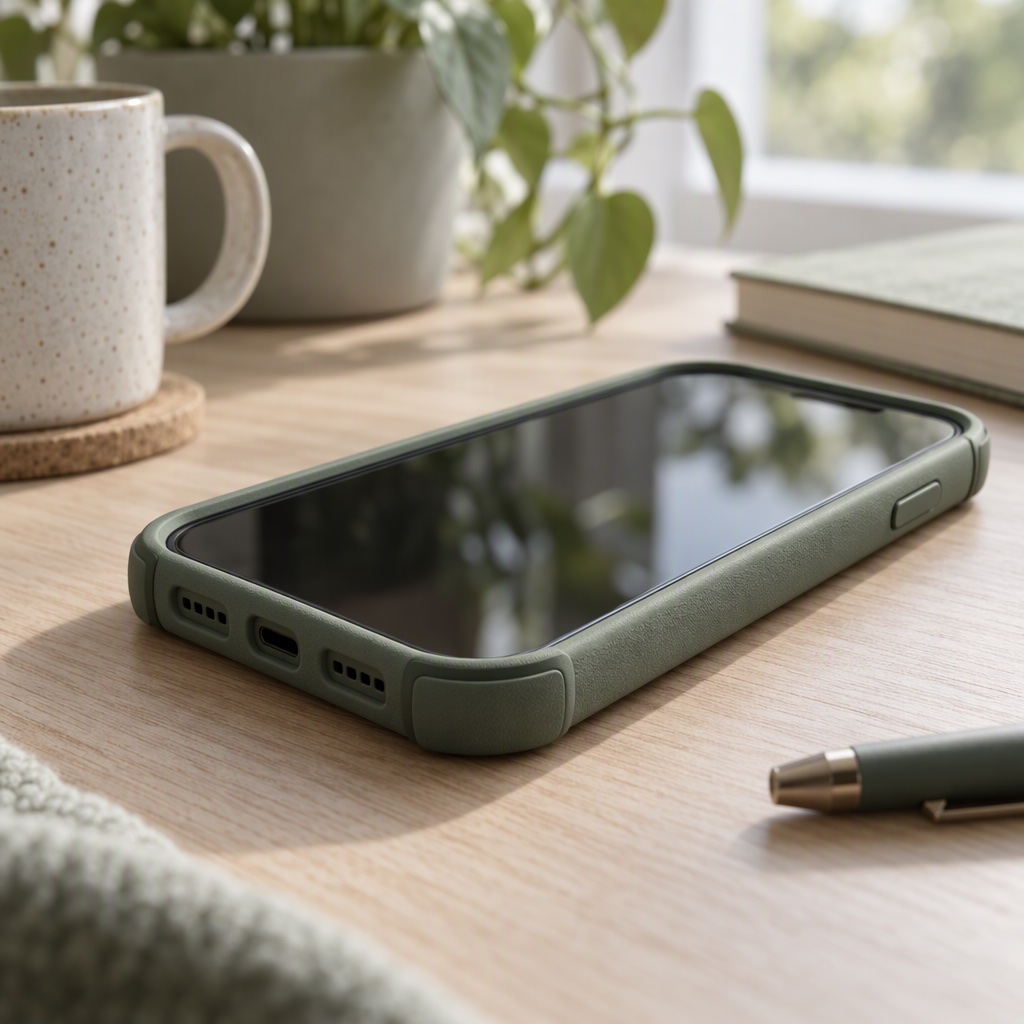
The beach combines four things that damage phones: salt water, sand, strong sun and heat. Salt water corrodes contacts, sand finds its way into every opening, and sustained heat shortens battery life. None of that means you should leave the phone in the car — it means you should decide in advance how the phone will be handled, and put the right accessories in the bag.
- Water resistance fades over time and is rated for clean water, not salt water.
- Sand and salt are the two real risks, and both attack the charging port first.
- Keep the phone in the shade, sealed, and off the towel line.
- Rinse nothing — wipe salt away with a damp cloth, and let the port dry completely.
Is a water-resistance rating enough?
A resistance rating is measured in clean, still water at a specific depth for a short time. Salt water is more corrosive, and the sea is neither still nor a controlled depth. Ratings also degrade as the seals wear with age and as tiny cracks form around the charging port from every cable insertion. A rating gives you confidence in a rain shower, not in a wave. Treat it as an accident buffer, not a licence to take the phone into the water. It also helps to know where the phone has been opened, because a previous screen repair weakens the seal permanently in a way you cannot see. Check that the case you plan to use does not trap grit against the back of the phone, because trapped sand scratches the finish every time you set it down.
What is the real risk from sand?
Sand is abrasive and it lodges. The charging port is the usual entry point, and a grain of sand in there will either block the cable or scratch the contacts. The speaker and microphone grilles clog too, which makes calls quiet and video muffled. Sand in a pop socket or a grip mechanism will jam it permanently. The way to avoid all of this is to keep the phone off the towel and out of the sand box, and to close any port cover before sitting down. A slim protective film on the back also makes wiping sand off safer. Keep any port cover closed whenever the phone is resting on a surface, and open it only to charge in a sheltered, dry spot. Choose a dry bag with a zip seal and a roll-top, since that combination keeps both water and fine sand out far better than a single lightweight closure.
How do you deal with salt water?
If the phone is splashed, the temptation is to rinse it in fresh water, but that is only safe if the phone is rated for submersion and the port cover is fully closed — salt crystals are abrasive and rinse water can push salt further into the seams. The practical approach is blotting with a clean, slightly damp cloth, then letting the port dry. Never charge the phone until you are certain the port is dry, because water plus current is how ports fail. A small fan or a gentle shake beats a hair dryer, which can force moisture further in. If salt crystals are visible along a seam, a soft dry brush is safer than anything wet, because water simply dissolves them back into the gap. Never leave the phone lying on a towel in full sun; even open shade under a chair is a cheaper answer than any cooling accessory you can buy.
Does heat matter as much as water?
Yes, and it is less obvious. Direct sun on a dark phone on a dark towel can push surface temperatures well above safe levels, and sustained heat degrades the battery permanently. Keep the phone in a bag or under a hat rather than beside a sunbather, and never leave it in a car. A light-coloured case reflects more heat than a black one. If the phone feels hot, move it somewhere cooler and let it cool gradually rather than putting it against something cold, which causes condensation. A phone left in the sun will shut itself down once it gets too hot, so treat that warning as genuine and move it somewhere cooler immediately. Blot the seams gently rather than rubbing, because scrubbing simply grinds the salt crystals deeper into the finish and into the gaps between panels.

iPhone Cases — case. Designed for everyday carry and backed by our 30-day happiness guarantee.
What should you keep in the beach bag?
A dry pouch for the phone is the most useful single item, and a clear waterproof one lets you use the phone through it. A microfibre cloth, a small blower or can of air for the port, and a sealed bag for the phone when you swim. Consider a floating strap for a paddle or a boat. A slim waterproof case is cheaper than a repair and stops the phone rolling into the sea. Keep the phone in a zipped compartment rather than loose in a sandy tote. Related gear is covered in our look at waterproof versus water-resistant cases. If you are going into the water, decide in advance whether you need the phone at all; a simple waterproof watch is often a better companion. Take fewer photographs and let yourself look at the water more, because the phone gets handled far less over an afternoon spent that way.
How do you take good beach photos safely?
Beach light is bright and reflective, so your automatic exposure will usually underexpose faces. Tap the screen on the subject and lift the exposure slightly, and use the reflected light off wet sand as fill instead of firing a flash. Hold the phone over a towel rather than directly above sand, and consider wiping your hands and the phone first. For more on shooting in this kind of light, our guide to taking better photos with your phone covers the underlying habits. Reflections on wet sand can double the light reaching a face, but they also turn windows into mirrors, so check your angle before you shoot. Wipe the screen before every shot, since salt spray and fingerprints leave a film that ruins reflections and makes the display look unexpectedly dull.
Frequently asked questions
- Can I use my phone in the sea?It is not advised. Ratings assume fresh, still water, and salt water corrodes seals and contacts faster than fresh water.
- Is it safe to charge after a beach day?Only once the port is completely dry and free of salt. Inspect it with a torch before connecting a cable.
- Does a waterproof pouch let me use the phone?A clear waterproof pouch usually does, though touch response is less accurate and the screen reflection increases.
- How do I clean a clogged speaker grille?Use a soft, dry brush in one direction. Avoid sticky tape, which can push grit further in.
- Will salt air damage the phone internally?Over long exposure it can corrode contacts. Wipe it down after every visit and keep it sealed.


