
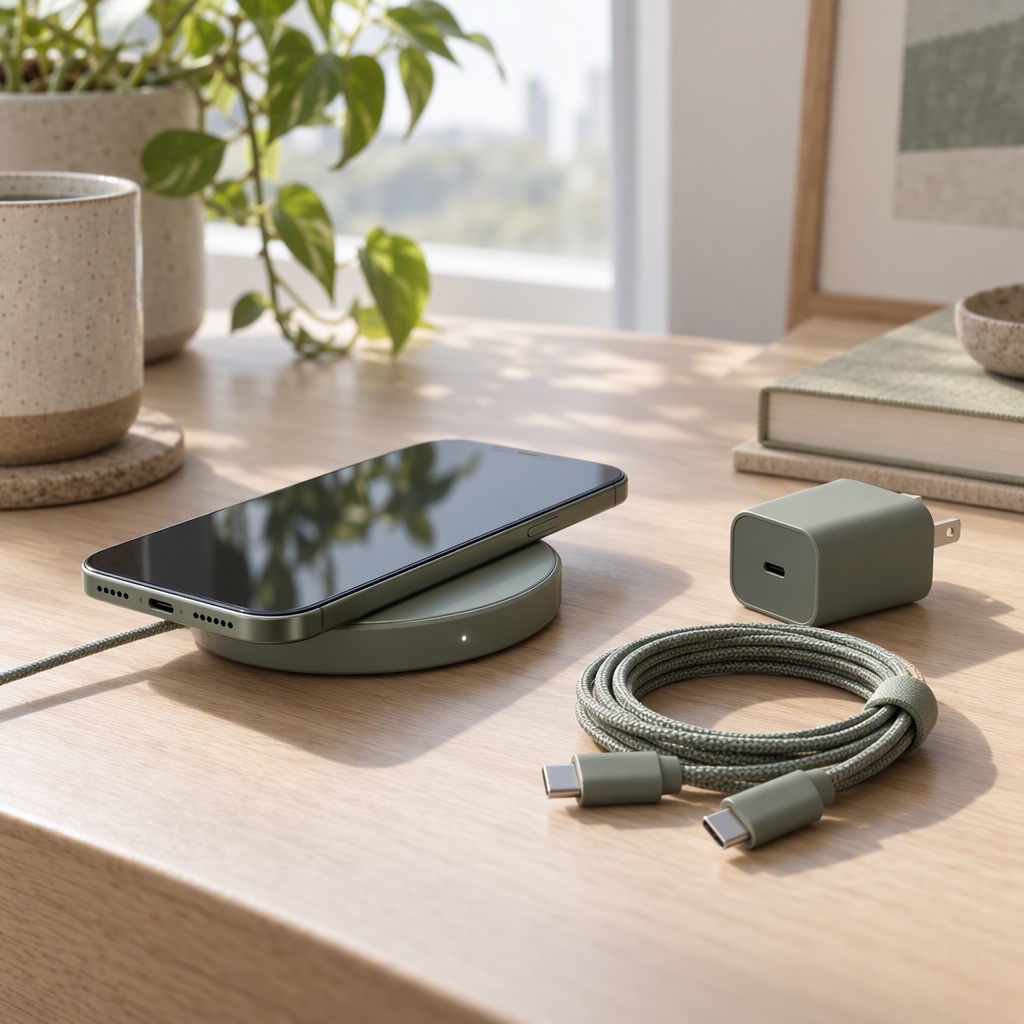
Neither method wins outright — wired and wireless charging solve different problems. A cable is faster and wastes less energy; a wireless pad is more convenient and spares your charging port from constant plugging. The better question is which one suits the places you actually charge your phone, and for most people the honest answer turns out to be a mix of both. Knowing the strengths of each method lets you stop guessing and set up charging that quietly works in the background.
- Wired is faster and more efficient when you need a quick top-up.
- Wireless is easier for repeated charging at a desk or bedside.
- Both methods create heat, and heat is what ages a battery.
- Pick the method that fits where you naturally leave your phone to charge.
How does wired charging actually work?
A cable carries power directly from the charger to your phone’s charging port. Because the connection is physical, very little energy is lost on the way, and the phone can negotiate a fast rate with the adapter. Wired charging is the most efficient method available today, which is why it remains the fastest option for topping up in a hurry. It also lets you use the phone freely while it charges, since the cable moves with the phone in your hand. The main downside is mechanical: every plug and unplug puts a little wear on the port and the connector, and a worn port can eventually become unreliable. Good cables and careful handling go a long way toward avoiding that. It is also the method that gives you the most control, because you can see exactly how fast the phone is filling and unplug when you are ready.
MagSafe & Charging — charger. Designed for everyday carry and backed by our 30-day happiness guarantee.
How does wireless charging actually work?
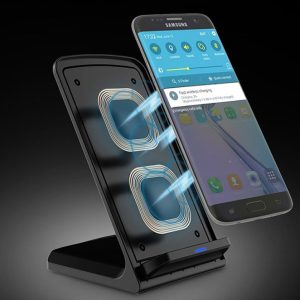
Wireless charging passes energy through a magnetic field between a coil in the charger and a coil inside your phone. There is no plug, so nothing wears out, and you can pick the phone up and set it down as often as you like. The cost is efficiency: some energy turns into heat instead of charge, so wireless is generally slower than a cable and uses a little more electricity for the same result. It also needs reasonable alignment — if the phone sits off-center, charging slows or stops altogether. Thick cases can interfere as well, though most modern cases are thin enough to work without any trouble. Placement matters more than most people expect, so a case that centers the phone on the pad can make wireless charging noticeably more reliable.
Which one is faster?
A cable wins on raw speed, and the gap is real. Wired charging can push a large amount of power into a phone in a short time, while wireless charging is limited by how much energy the coils can transfer without overheating. If you have ten minutes and a nearly flat phone, reach for a cable. Wireless charging is better suited to slow, steady top-ups — overnight, or across a working day at a desk, where speed hardly matters because the phone sits there for hours anyway. Many people keep a cable in a bag for emergencies and a wireless pad at home, and that combination covers almost every situation. If speed is your priority, treat wireless as a bonus rather than your main plan.
Which one is better for your battery?
Both are fine for your battery when used sensibly, and the difference between them is smaller than the difference between good and bad charging habits. What ages a battery most is heat, and wireless charging generates a little more of it. That does not make wireless harmful, but it does mean you should avoid charging wirelessly under a pillow, on a bed or in direct sun. Wired charging runs cooler and is easier to keep ventilated. In both cases, keeping the phone out of extreme heat matters far more than the method you choose, so treat heat as the thing to manage. To go deeper, see what actually changes charging speed. A phone that stays cool will generally outlast one repeatedly charged in a hot car, whatever the method.
MagSafe & Charging — charger. Designed for everyday carry and backed by our 30-day happiness guarantee.
Which is more convenient day to day?
Wireless charging shines in places where you set your phone down repeatedly: a bedside table, a desk, a kitchen counter. You stop thinking about charging at all, because the phone tops up whenever it rests in the right spot. Wired charging is more flexible, since a cable works anywhere there is a socket and reaches the phone in your hand while you use it. It is also the only option on a plane seat, in a car without a wireless pad, or when you are moving around. Convenience, not performance, is the real reason most people end up preferring one over the other. The best setup is the one that takes the least thought, because a charging habit only sticks if it is effortless.
Can you use both without any problems?
Yes, and most people do. There is nothing harmful about switching between a cable and a pad; your phone simply takes what it is offered. A sensible setup is a wireless pad where you spend long, stationary hours and a cable for travel, quick top-ups and any situation where you need the phone in your hand. If you use a magnetic wireless charger, check that your case does not block the magnets — our guide to whether magnetic cases are worth it explains what to look for. Keep an eye on heat, too: if the phone feels hot to the touch while charging, move it somewhere cooler. Whichever method you favor, buy a charger you trust, because an unreliable one undermines both.
Frequently asked questions
- Is wireless charging bad for my phone? No. It produces slightly more heat than a cable, and heat is what ages a battery over time, but sensible use causes no real harm. Just keep the phone ventilated while it charges and avoid leaving it under a pillow or blanket.
- Can I charge through a case? Usually yes, if the case is reasonably thin and not made of metal. Very thick or heavily armored cases can block the magnetic field and slow charging or stop it completely.
- Do I need a special case for magnetic charging? Only if you want the phone to snap into place. A plain case will still charge wirelessly on a flat pad, but magnets need a case designed to let them through, usually with a magnetic ring built in.
- Is it safe to leave my phone on a wireless charger overnight? Generally yes. Modern phones stop drawing power once they are full, so overnight charging is not the problem people once feared. Heat, not duration, is the concern.
- Why does my phone get warm when charging wirelessly? Some energy is always lost as heat during the transfer, and that warmth is normal. If it becomes uncomfortable to hold, something is wrong — check alignment or remove the case.


